
Last updated September 22, 2026
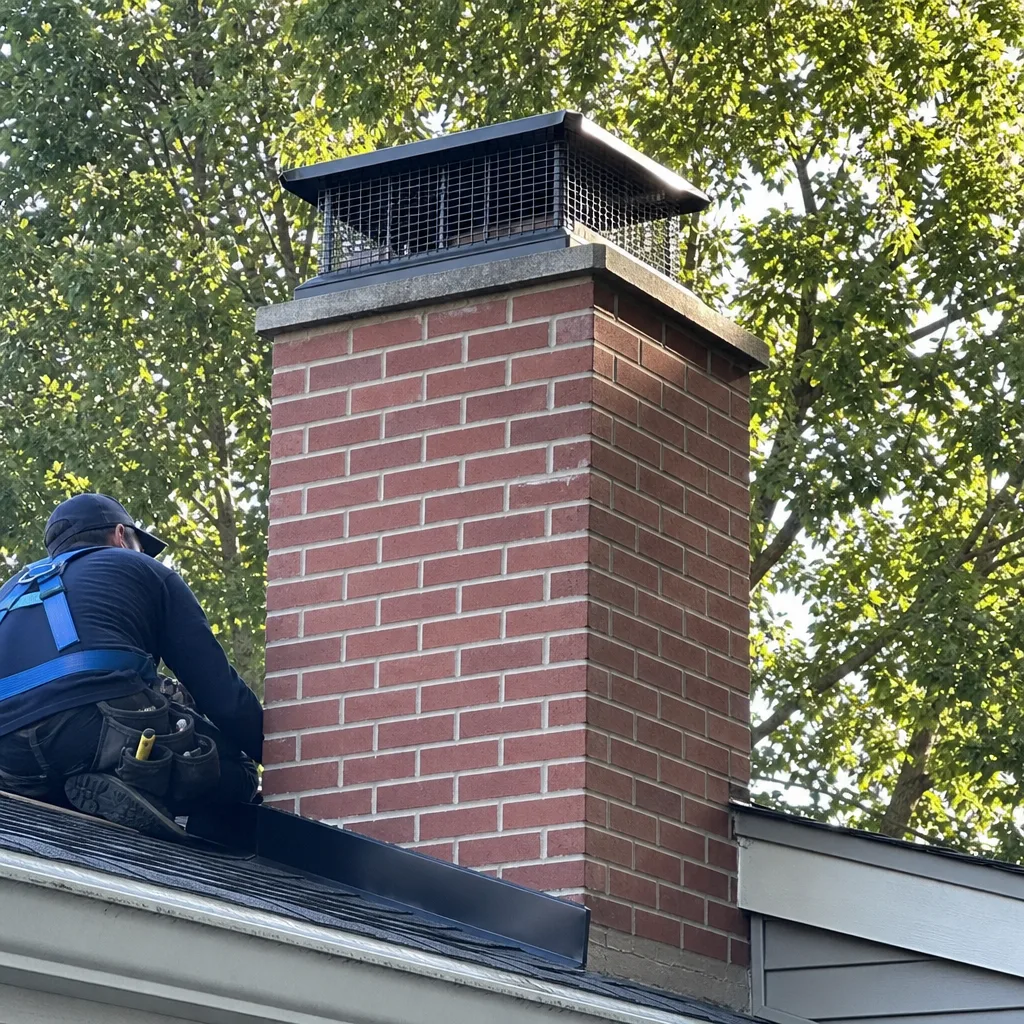
Level 1 sweep and inspection to the NFPA 211 annual standard - flue, crown, cap, and flashing checked and photographed
Chimney sweep logs do not sweep chimneys. They loosen some creosote - which then falls where a brush and vacuum still have to collect it.
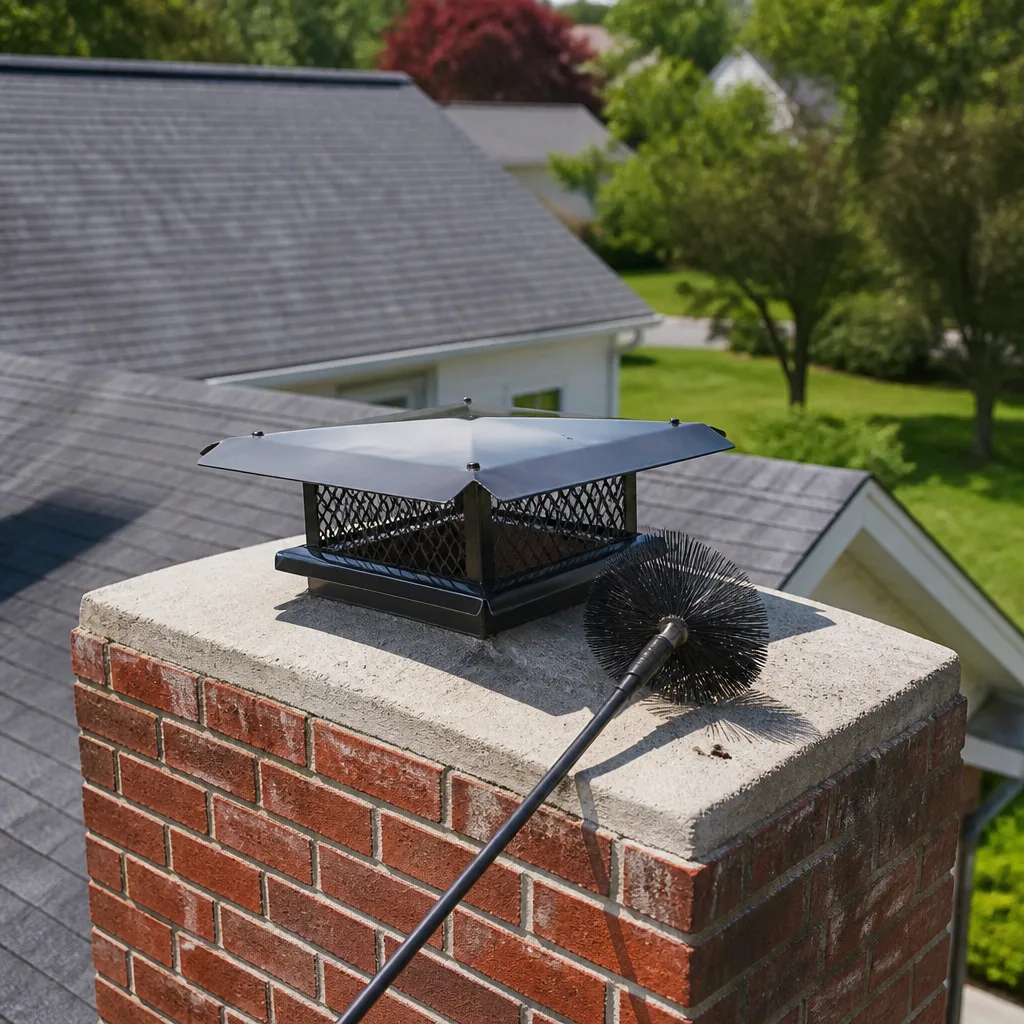
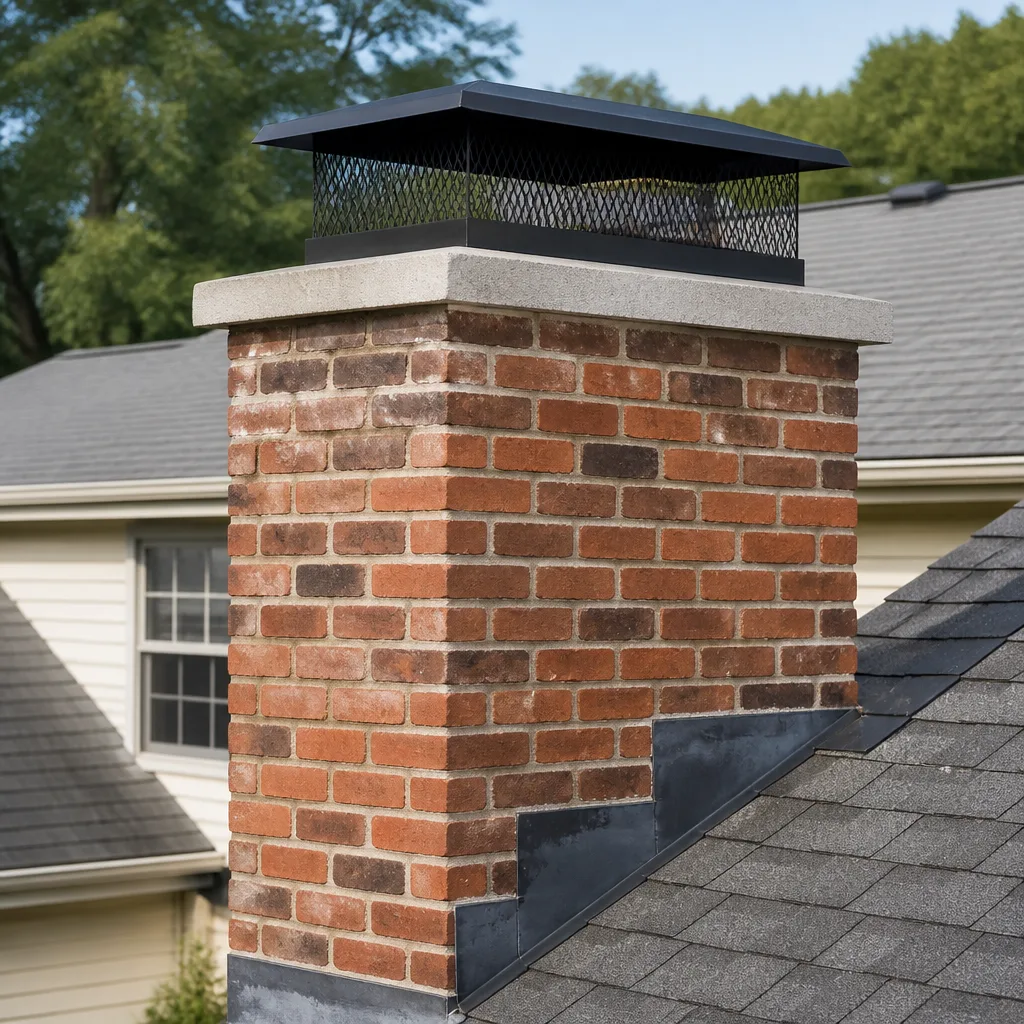
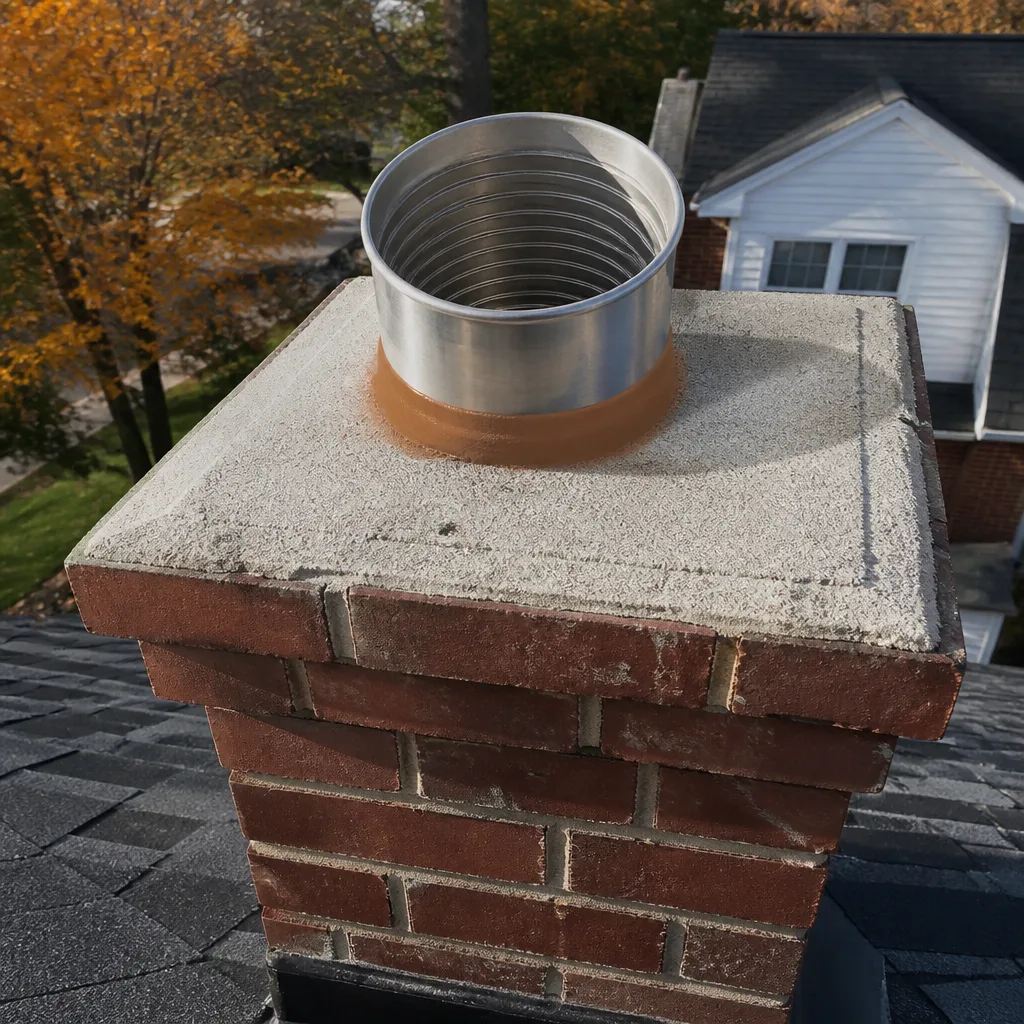
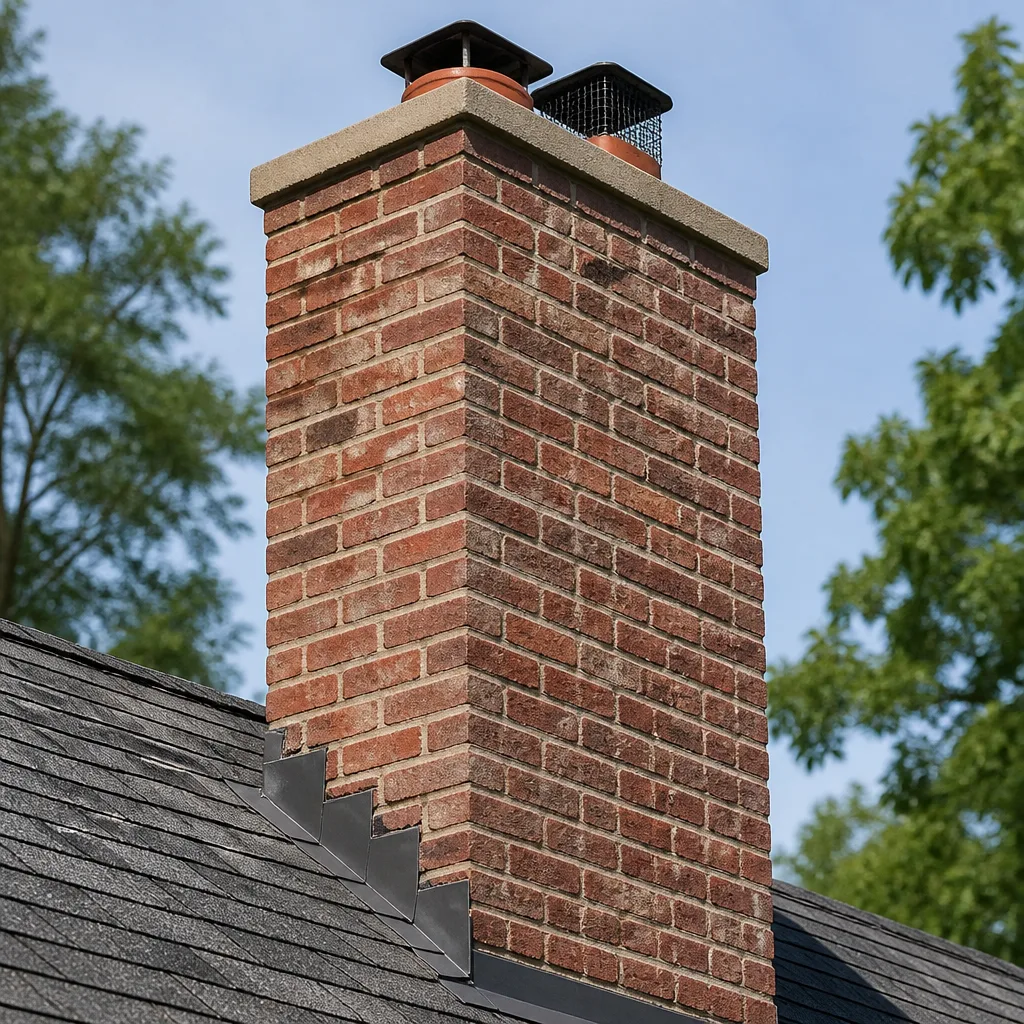
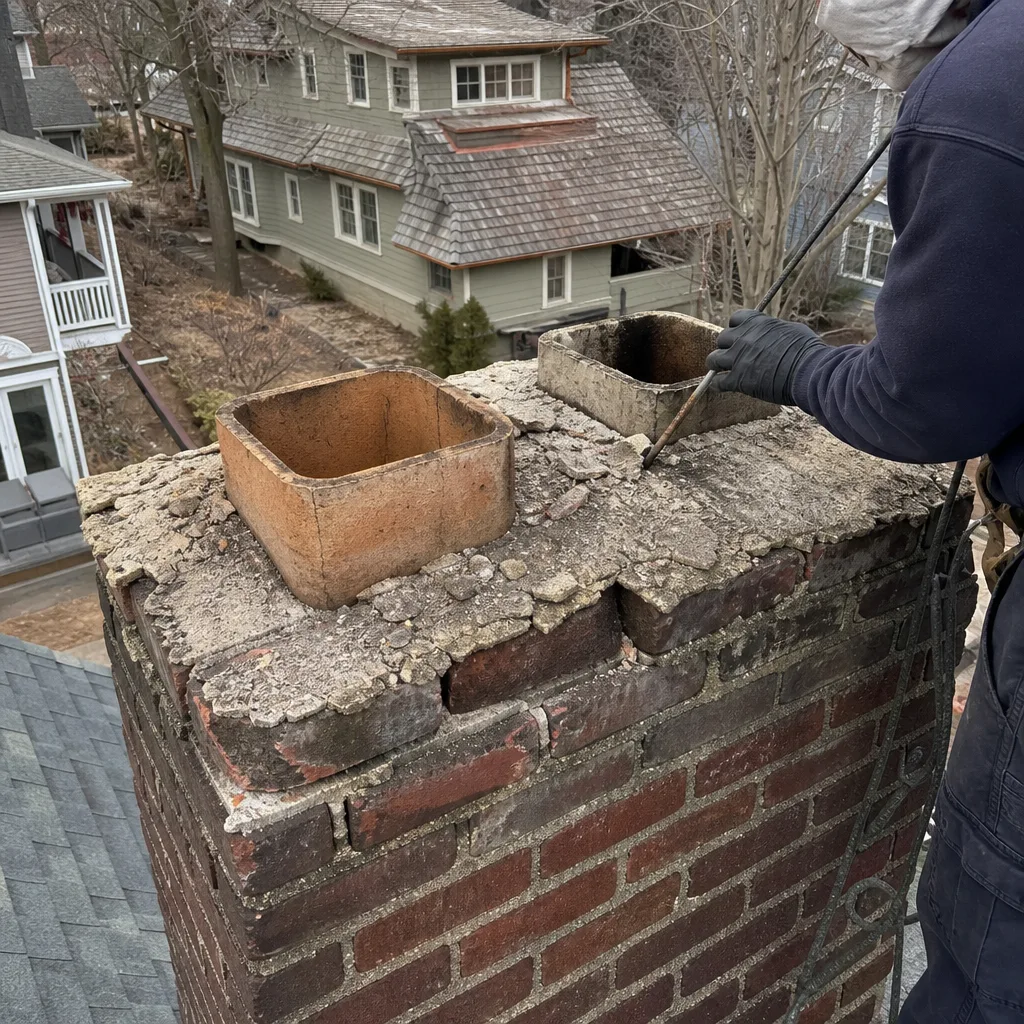 Before
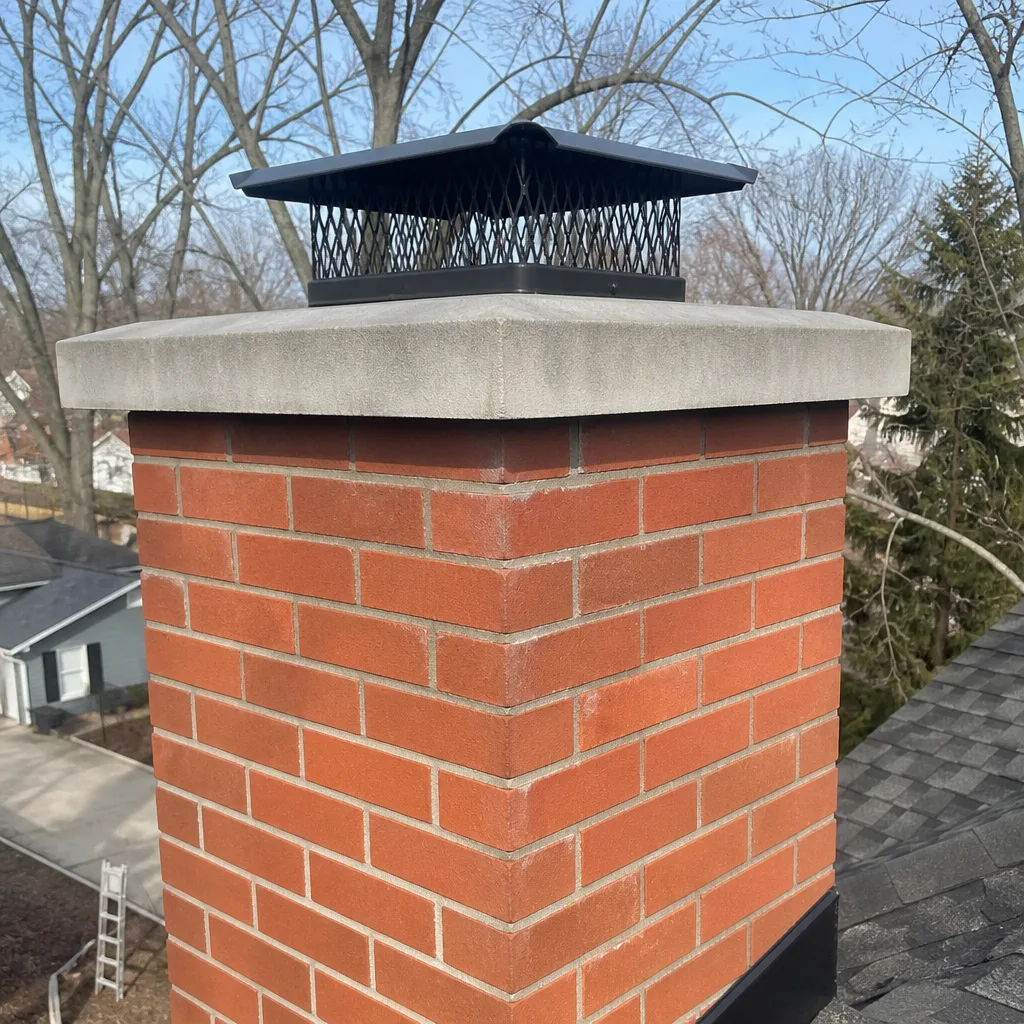 After
After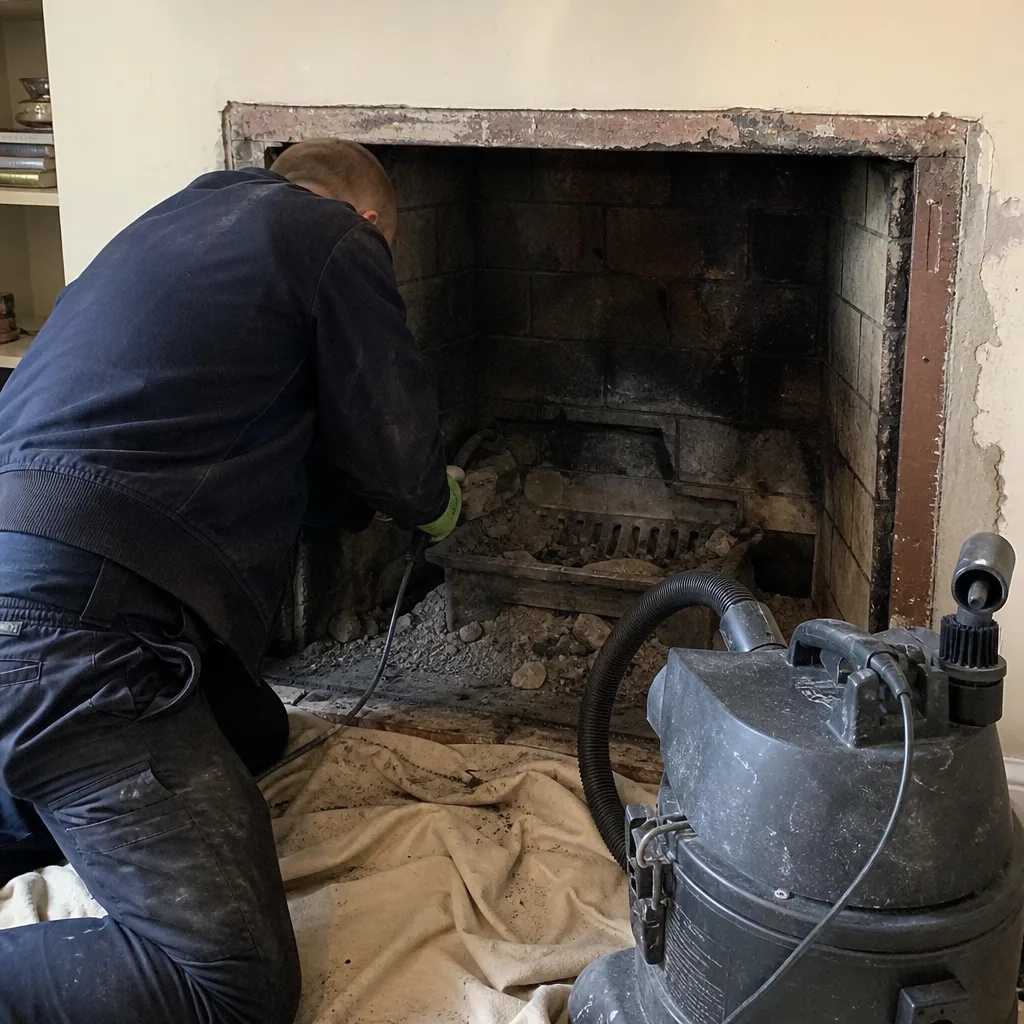 Before
 After
After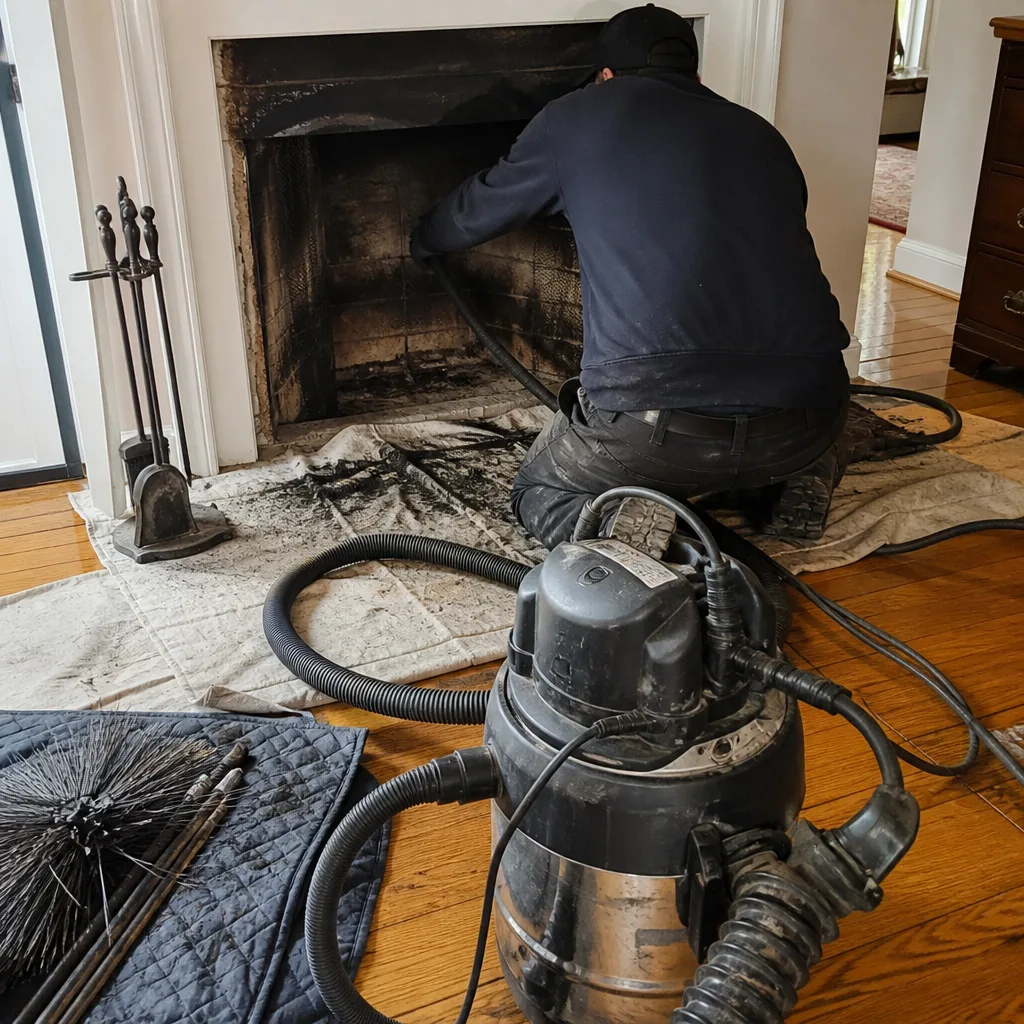 Before
 After
AfterDIY vs Professional Chimney Cleaning: The Evanston Homeowner’s Decision Guide
A $45 chimney brush kit from the hardware store will remove the same light soot that a $150 sweep visit removes. It won’t tell you whether the tile liner behind that soot has a hairline crack at the third offset - the kind that passes combustion gases into the wall cavity and doesn’t produce a smell until there’s enough carbon monoxide in the bedroom to matter. In Evanston, where pre-war masonry chimneys outnumber factory-built metal systems by a wide margin, the DIY versus professional question isn’t really about who can push a brush. It’s about who can document what the brush didn’t reach. This guide - alongside our How to Hire a Chimney Cleaning Contractor in Evanston: A Step-by-Step Guide - breaks down exactly which tasks a competent homeowner can handle, which ones require licensed documentation, and where the gap between the two creates real exposure for your insurance, your home sale, or your family’s safety.
Quick Answer
Most Evanston homeowners can safely perform basic firebox cleanout, damper inspection, and exterior cap checks between annual professional visits. A professional chimney sweep is required for camera-scan flue inspection, liner condition certification, and any written report used for insurance, real estate, or warranty purposes. The dividing line is documentation: DIY moves creosote; only a professional produces the photo record and signed condition report that third parties accept as evidence.
Table of Contents
- What DIY Chimney Cleaning Actually Accomplishes
- Why Evanston’s Housing Stock Changes the DIY Calculation
- The Three Tasks a Homeowner Can Safely Handle
- What Legally and Practically Requires a Professional
- DIY Cost vs. Professional Cost: What You Actually Get
- The Hybrid Approach: DIY Maintenance Between Professional Inspections
- Common Mistakes to Avoid
- When to Call a Professional
- Frequently Asked Questions
- The Bottom Line
 Before
 After
AfterWhat DIY Chimney Cleaning Actually Accomplishes
Let’s start with what a homeowner with a brush kit, a shop vacuum, and a ladder can realistically achieve. A standard DIY chimney cleaning removes loose, powdery soot (Class I creosote) from the flue walls, firebox floor, and smoke chamber entrance. If you’re burning properly seasoned hardwood, maintaining adequate air supply, and running hot fires, that’s often the bulk of your annual accumulation. The brush won’t remove glazed or tar-like Class III creosote, which requires chemical treatment or mechanical removal with specialized chains and whips. More importantly, the brush won’t tell you what condition the surface is in underneath the soot.
We’ve inspected chimneys in Evanston’s Central Street corridor where the homeowner had brushed faithfully every fall for fifteen years. The flue looked clean. Our camera found a missing mortar joint between the fifth and sixth flue tiles, creating a gap that allowed exhaust to vent directly into the masonry wall for more than a decade. No brush would have found it. No homeowner would have smelled it. The carbon monoxide detector never triggered because the leak was diffuse, not concentrated. This is the core limitation of DIY: it maintains appearance without verifying structure.
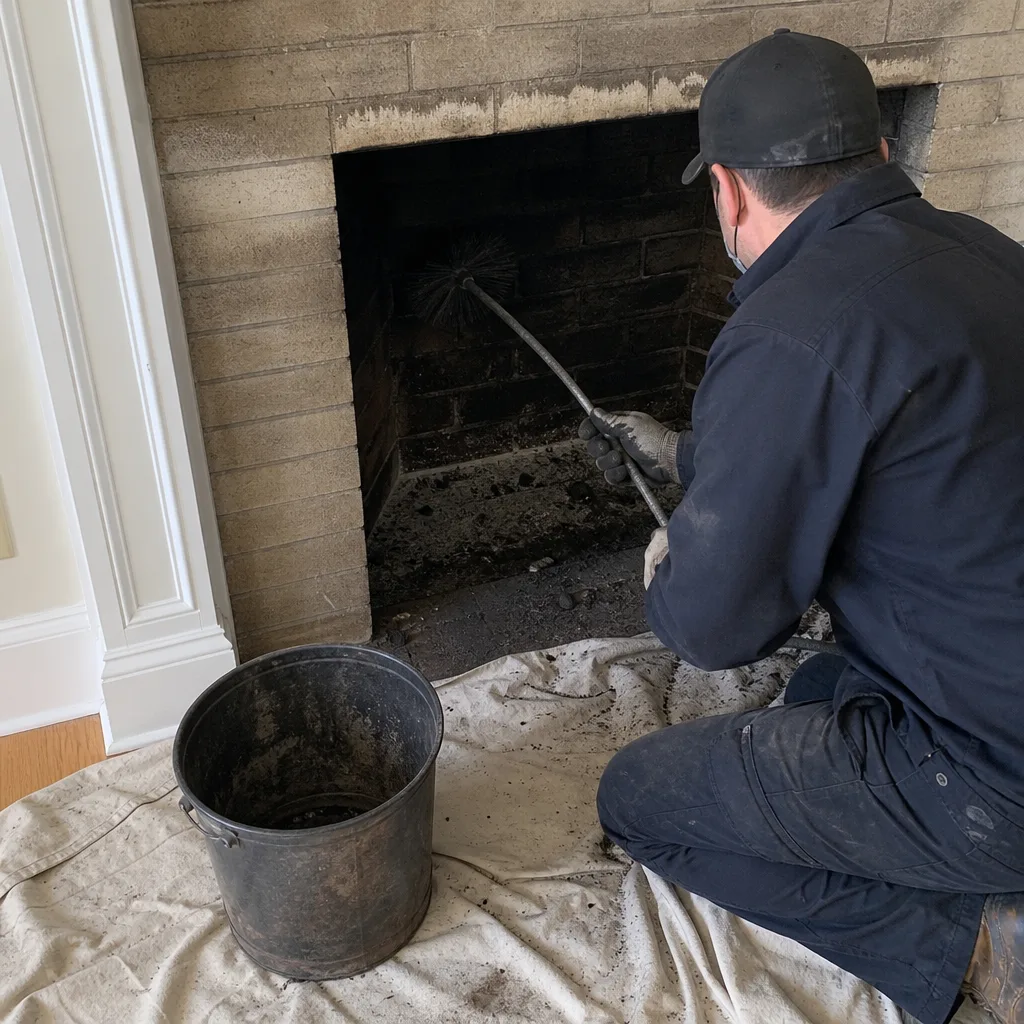
What DIY does accomplish is useful between professional visits. Removing ash and debris from the firebox reduces acidic moisture that deteriorates firebrick. Checking the damper for free operation ensures you can close it when the fireplace isn’t in use, saving heating energy through Evanston’s long winters. A visual inspection of the chimney cap from the ground or a low ladder can spot obvious blockages from bird nests or storm damage. These are maintenance tasks, not diagnostic procedures. They keep the system functional; they don’t certify it safe.
The documentation gap is where DIY falls apart for any purpose beyond personal maintenance. Insurance adjusters after a chimney fire want a dated, signed inspection report with photos. Buyers in an Evanston real estate transaction want a Level 2 inspection per NFPA 211, which includes camera documentation of the entire flue interior. Warranty claims for factory-built fireplaces require proof of annual professional service. Your handwritten log of brush dates satisfies none of these requirements.
Why Evanston’s Housing Stock Changes the DIY Calculation
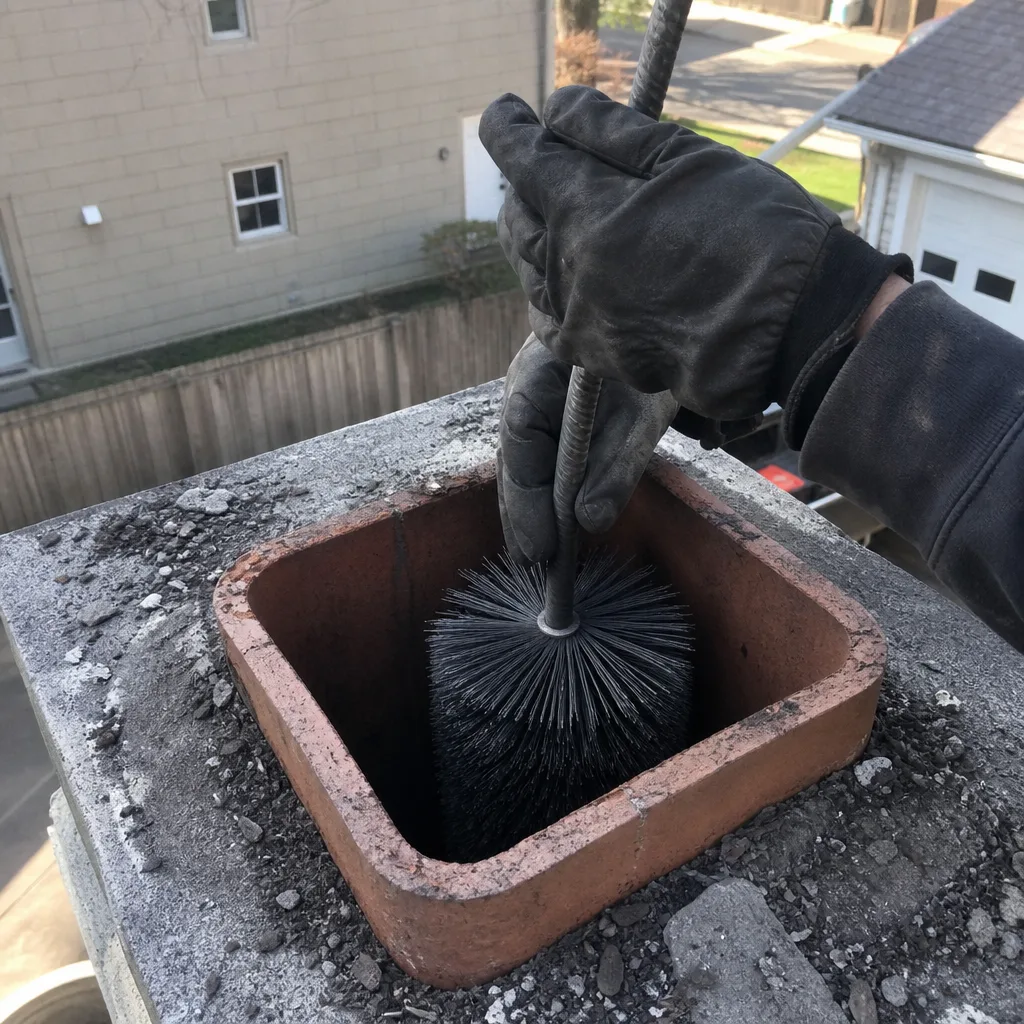
Evanston’s building inventory skews heavily toward pre-1940 masonry construction, particularly in neighborhoods like the Historic District, Lakeshore, and parts of Central Street. These chimneys were built with clay flue tiles mortared together in 2-foot sections, creating joints every 24 inches that are the most common failure point we find. The tiles themselves are brittle, and decades of thermal cycling - especially the extreme temperature swings of Lake Michigan-influenced winters - create hairline cracks that propagate from the joints inward.
A homeowner running a standard polypropylene brush up a flue like this faces a specific risk: brush sizing. Too small, and the bristles don’t make wall contact, leaving creosote in place. Too large, and the bristles catch on tile edges, joint irregularities, or existing cracks, applying lateral force that a brittle clay tile can’t absorb. We’ve retrieved broken brush sections from flues where the homeowner’s aggressive brushing dislodged a tile section that then blocked the flue entirely. In one case near Dempster Street, the broken tile created a partial obstruction that redirected exhaust into a bedroom wall cavity for two heating seasons before we found it during a camera inspection.
The Lake Michigan climate adds another variable. Evanston’s freeze-thaw cycles are more severe than inland Chicago suburbs, accelerating mortar deterioration in chimney crowns and between flue tiles. A crown with hairline cracking in October can be spalling chunks by March. The homeowner looking up from the ground sees a crown; they don’t see the internal water track that follows the flue interior down to the smoke chamber, carrying dissolved salts that corrode metal dampers and degrade firebrick.
Newer construction in west Evanston and near the university includes more factory-built metal chimneys with stainless steel flue liners. These systems are more forgiving of DIY brushing because the smooth metal surface doesn’t have tile joints to catch bristles. But even here, the termination cap, storm collar, and flashing details require specific clearances and sealing that a visual check from the ground won’t verify. And factory-built systems have their own documentation requirements: most manufacturers void warranties if annual professional inspection isn’t documented.
Local code enforcement in Evanston follows the 2021 International Residential Code with Evanston amendments, which references NFPA 211 for chimney standards. The code doesn’t prohibit DIY cleaning. It does require that any chimney serving a solid-fuel appliance be inspected annually and cleaned as needed. The “as needed” determination is where professional judgment becomes relevant, and where documentation matters for compliance.
The Three Tasks a Homeowner Can Safely Handle
Based on our experience across 38,000 inspections, we’ve identified three maintenance tasks that a competent Evanston homeowner can perform without professional equipment or certification. Each has clear limits, and each should be recorded in a simple log with dates for reference.
1. Firebox Cleanout and Inspection
Tools needed: Metal ash shovel, metal bucket with tight lid, shop vacuum with HEPA filter, flashlight, inspection mirror.
- Wait 72 hours minimum after last fire; ashes can retain enough heat to ignite combustibles days later.
- Shovel loose ash into the metal bucket. Do not use plastic; embers can melt through.
- Vacuum remaining fine ash with a HEPA-filtered shop vac. Standard household vacuums blow fine particulate through the bag and motor housing.
- Inspect firebrick for spalling (surface flaking), cracking, or mortar loss. Minor surface spalling is cosmetic; cracks wider than 1/8 inch or missing mortar joints need professional evaluation.
- Check the hearth extension for cracks or settling that would allow embers to reach combustible subflooring.
- Document with dated photos on your phone.
Limit: This addresses the firebox only. The smoke chamber above and flue beyond remain uninspected.
2. Damper Operation and Condition Check
Tools needed: Flashlight, inspection mirror, light machine oil, wire brush.
- Operate the damper through its full range. It should move freely without binding or grinding.
- With damper closed, check for visible gaps using flashlight from below. Some light around edges is normal; a 1/4-inch gap or more indicates warping or misalignment that wastes heating energy.
- Clean rust and creosote from damper plate and frame with wire brush.
- Lubricate pivot points with light machine oil. Do not use WD-40 or grease; they attract creosote and can ignite.
- Verify damper closes fully and opens to approximately 90 degrees for proper draft.
Limit: Throat dampers in older Evanston homes often have corroded frames or missing hardware that isn’t visible without removing the damper entirely. Smoke chamber access is required for full evaluation.
3. Exterior Cap and Crown Visual Inspection
Tools needed: Binoculars, camera with zoom, ladder (only if comfortable with heights and ladder safety).
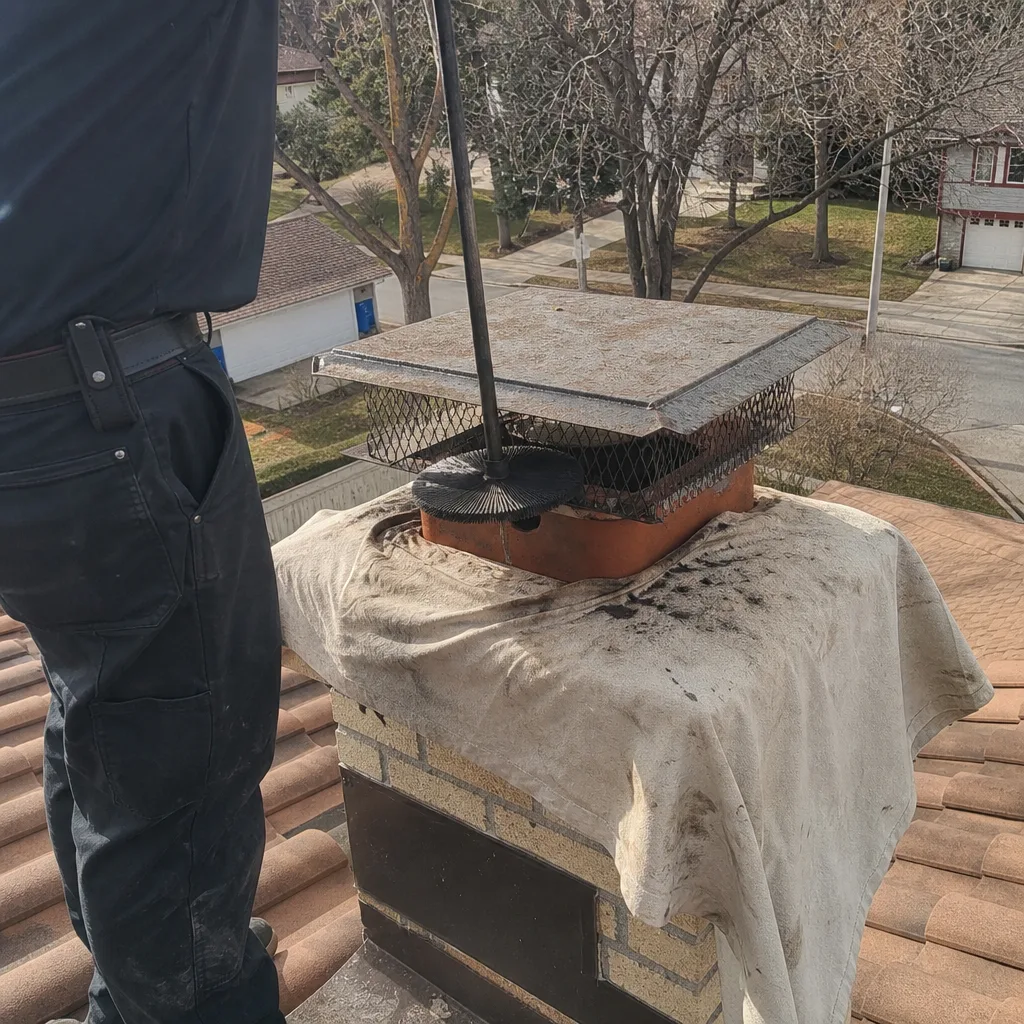
- From ground level with binoculars, verify cap is present, properly seated, and mesh is intact without rust holes or damage.
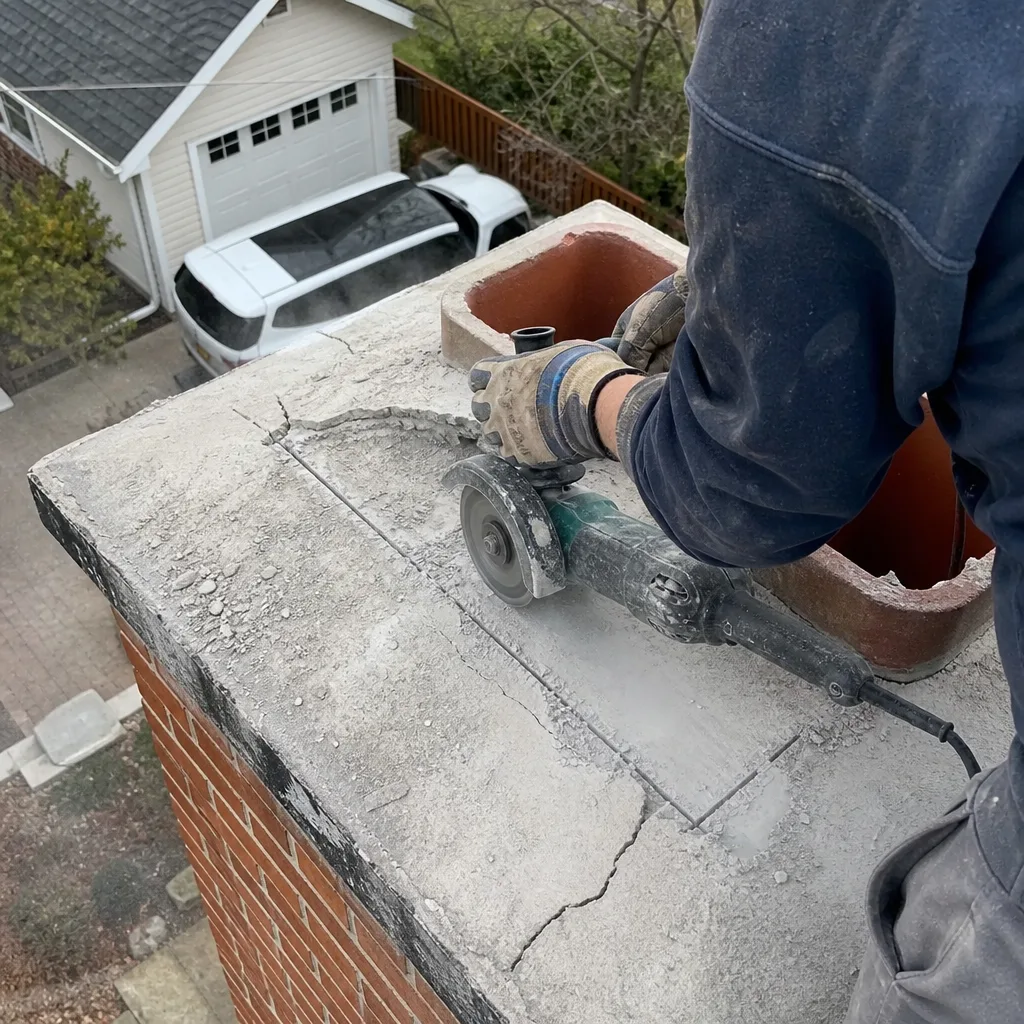
- Check crown (the concrete top of masonry chimneys) for cracks, spalling, or pooling. A crown should slope away from the flue opening to shed water.
- Inspect flashing where chimney meets roof for lifted edges, missing sealant, or rust.
- Note any vegetation growth, which indicates mortar joint failure holding moisture and organic material.
- Photograph from consistent angles for year-to-year comparison.
Limit: This is visual only. Crown integrity below the surface, flue liner condition, and internal water damage require camera inspection.
What Legally and Practically Requires a Professional
Certain chimney work cannot be performed by homeowners under Illinois law, manufacturer warranty terms, or insurance policy requirements. More importantly, some work produces no value without professional documentation attached.
Camera-Scan Flue Inspection (NFPA 211 Level 2)
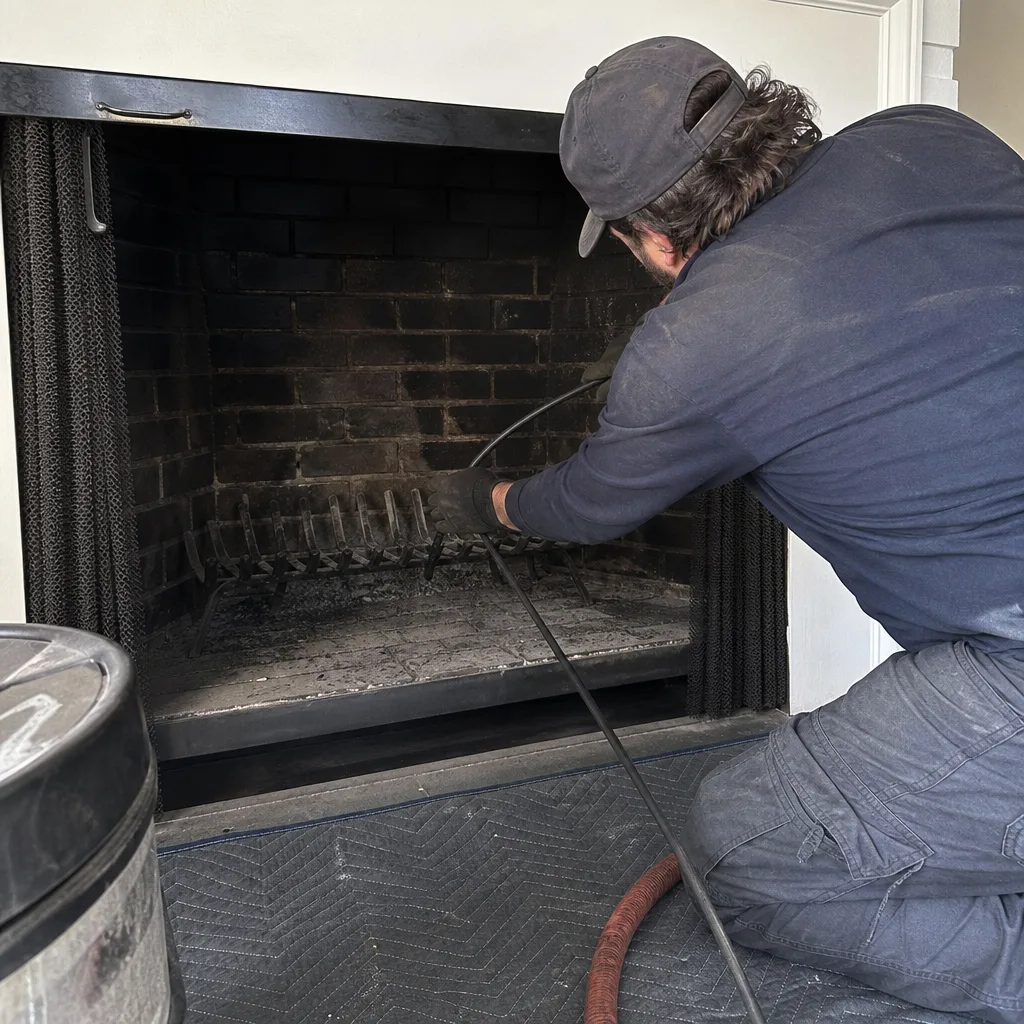
The Chimney Cleaning & Sweep in Evanston that we perform follows NFPA 211 Level 2 standards, which require visual inspection of accessible portions of the chimney exterior and interior, including the flue interior by video scanning or other means. The camera - typically a high-resolution unit on a flexible rod with LED lighting - documents every flue tile joint, every offset, every surface defect. In Evanston’s pre-war chimneys with multiple offsets (changes in direction) between floors, this is the only method that inspects the entire flue path.
Homeowners cannot rent equipment that produces documentation meeting this standard, and even if they could, the interpretation requires training. A hairline crack in a flue tile is not always a failure; orientation, location, and thermal history determine whether it presents immediate hazard or monitoring condition. We’ve seen homeowners replace entire flue liners based on camera images they misinterpreted, spending thousands unnecessarily, while others ignored cracks that our assessment flagged for immediate repair.
Clause 4 of the Haven Standard requires this photo record on every job we perform. The archive practice we started in 2009 - before regulators or insurers asked for it - means every Level Two Chimney customer has dated, searchable documentation of their flue condition over time. This isn’t optional documentation; it’s the standard that makes inspection meaningful.
Liner Condition Certification
Any statement about flue liner suitability for continued use must come from a qualified professional. In real estate transactions - common in Evanston’s active market near Northwestern and the lakefront - buyers increasingly request liner condition certification as a contingency. This is a written opinion, backed by camera evidence, that the liner is intact, properly sized for the appliance served, and suitable for its intended fuel.
Homeowners cannot self-certify. Insurance companies won’t accept it. Title companies won’t accept it. The certification requires the certifier’s license, insurance, and professional standing - all elements that create accountability if the assessment proves wrong.
Repair Work Affecting Structural or Combustible Components
Chimney repair involving crown rebuilding, flue relining, or masonry reconstruction requires permits in Evanston for work exceeding $500 or affecting structural elements. The Chimney Repair in Evanston that we perform includes permit acquisition, inspection scheduling, and code compliance verification. Homeowner-performed repair without permits creates disclosure problems at sale and insurance coverage disputes after loss.
More critically, repair work near combustible framing - common in Evanston’s balloon-framed pre-war construction - requires understanding of clearance requirements and firestopping that most homeowners lack. A chimney fire in a properly maintained system is rare; a house fire from improper clearances during repair is preventable tragedy.
Factory-Built System Service for Warranty
Every major factory-built fireplace manufacturer - Heatilator, Majestic, Superior, and others common in Evanston’s 1980s-2000s construction - requires annual professional service for warranty validity. The service must be documented with date, technician identification, and scope. DIY maintenance voids the warranty without exception.
DIY Cost vs. Professional Cost: What You Actually Get
The price comparison that dominates online forums is misleading because it compares unlike outputs. For the actual breakdown, see our Chimney Cleaning Cost Breakdown: The Evanston Homeowner’s Reference for 2026.
DIY Chimney Cleaning: Costs and Deliverables
| Item | Cost | What You Receive |
|---|---|---|
| Polypropylene brush kit (rod + brush) | $35-$55 | Tool for soot removal from straight flues |
| HEPA shop vacuum or ash vacuum | $80-$150 (or rental $25/day) | Ash containment without dust dispersal |
| Ladder for roof access (if attempting cap work) | $150-$300 (or rental $40/day) | Physical access to upper chimney |
| Safety equipment: goggles, respirator, gloves | $40-$75 | Personal protection from creosote and particulate |
| Time investment (learning + execution) | 4-8 hours first year, 2-4 hours subsequent | Personal knowledge of your system |
| Total first-year investment | $305-$580 | Clean firebox and flue (straight sections only), no documentation |
Professional Chimney Sweep: Costs and Deliverables
| Item | Cost | What You Receive |
|---|---|---|
| Standard sweep with Level 2 camera inspection | $175-$295 | Complete flue cleaning, camera documentation, condition report |
| Written price before work starts (Haven Standard Clause 1) | Included | No surprise charges; scope agreed in advance |
| Documented photo record (Haven Standard Clause 4) | Included | Searchable archive of flue condition over time |
| 365-Day Done Right Promise | Included | Correction of any service deficiency without charge |
| Time investment | 90 minutes on-site, minimal homeowner presence | Professional execution without learning curve |
| Total annual investment | $175-$295 | Clean system, documented condition, transferable records, warranty backing |
The DIY route costs more in first-year equipment than professional service costs annually, and produces no documentation. The professional route costs less, takes less time, and generates records that protect property value and insurance coverage. The gap isn’t in cleaning quality for basic soot removal; it’s in what happens when something is wrong, when you need to prove maintenance history, or when you’re selling and the buyer’s inspector asks for documentation.
Materials matter in professional work. We source flue liners from DuraFlex and Olympia Chimney, caps and crowns from Famco and Copperfield, and repair materials from HeatShield and Gelco through Haven’s buying network. These aren’t brand names for marketing; they’re specifications that meet UL listings and manufacturer requirements. A homeowner buying generic brush kits and hardware-store sealants can’t match this specification compliance, and won’t know when it matters.
The Hybrid Approach: DIY Maintenance Between Professional Inspections
For many Evanston homeowners, the optimal approach combines responsible DIY maintenance with scheduled professional inspection, as detailed in more guides & resources. This isn’t a cost-cutting compromise; it’s a structured program where each party does what they’re equipped to do, and documentation bridges the gaps.
The Annual Professional Visit: What It Must Document
The professional inspection establishes baseline condition and identifies developing problems. For the hybrid approach to work, this visit must produce:
- Camera-scan documentation of the entire flue interior, with particular attention to offsets and joints
- Written assessment of creosote class (I, II, or III) and accumulation rate
- Evaluation of liner, smoke chamber, damper, and firebox condition with specific terminology
- Measurement of critical clearances to combustibles where accessible
- Dated, signed report with technician identification and company license
- Recommendations prioritized by urgency: immediate, before next burning season, monitor
Without this documentation, DIY maintenance between visits is blind. You don’t know whether your brushing is maintaining a clean flue or masking deterioration. The professional visit is the diagnostic; DIY is the maintenance between diagnostics.
Homeowner Maintenance Between Visits
Based on the professional assessment, perform these tasks quarterly during heating season:
- Firebox cleanout as described above, frequency adjusted based on creosote class reported
- Damper operation check monthly during active use
- Exterior visual inspection after severe weather events (Evanston’s lake-effect storms can damage caps and flashing)
- Burning practice discipline: only seasoned hardwood, hot fires with adequate air, no overnight smoldering
- Carbon monoxide and smoke detector testing monthly
The professional report should specify whether your creosote accumulation rate supports this interval or requires adjustment. Class I accumulators with good burning practice may extend; Class II or III require professional cleaning annually regardless of DIY effort.
When the Hybrid Approach Breaks Down
Don’t attempt the hybrid model if your professional inspection reveals: any flue tile crack or spalling; any suspected liner breach; damaged or missing chimney cap; crown cracking or deterioration; or previous chimney fire history. These conditions require professional monitoring and repair, and DIY brushing can worsen damage or create false confidence in system safety.
In Evanston’s rental market - common near the university - landlords sometimes attempt hybrid maintenance to minimize costs. This is particularly risky because tenant safety liability falls on the property owner, and undocumented maintenance won’t defend against negligence claims. Professional inspection with tenant notification is the appropriate standard.
Common Mistakes to Avoid
- Using a brush that’s the wrong size or material for your flue type. Metal bristles on clay tile causes scoring that accelerates creosote adhesion; polypropylene on stainless steel won’t clean effectively. Measure your flue before buying, and match material to liner type.
- Brushing from below without roof access or proper containment. The debris has to go somewhere. Without a vacuum connection or debris containment at the top, you’re distributing carcinogenic creosote particulate through your living space.
- Assuming a clean-looking firebox means a safe system. The most dangerous conditions are invisible from below. We’ve found completely blocked flues above spotless fireboxes in homes near Evanston’s lakefront where homeowners hadn’t had professional inspection in years.
- Ignoring the smoke chamber. The smoke chamber - the area above the damper that funnels smoke into the flue - is where many chimney fires start. It’s inaccessible to standard brushes and requires professional cleaning with specialized tools.
- Using chemical creosote removers as substitute for mechanical cleaning. These products modify creosote to make it more brushable, but don’t remove it. Used without subsequent brushing, they can create a flammable glaze that’s harder to remove than untreated creosote.
- Documenting nothing. Even purely DIY homeowners should keep dated photos and activity logs. In Evanston’s active real estate market, buyers increasingly ask for maintenance history. “I cleaned it myself” with no records is functionally equivalent to “I didn’t maintain it” in a transaction.
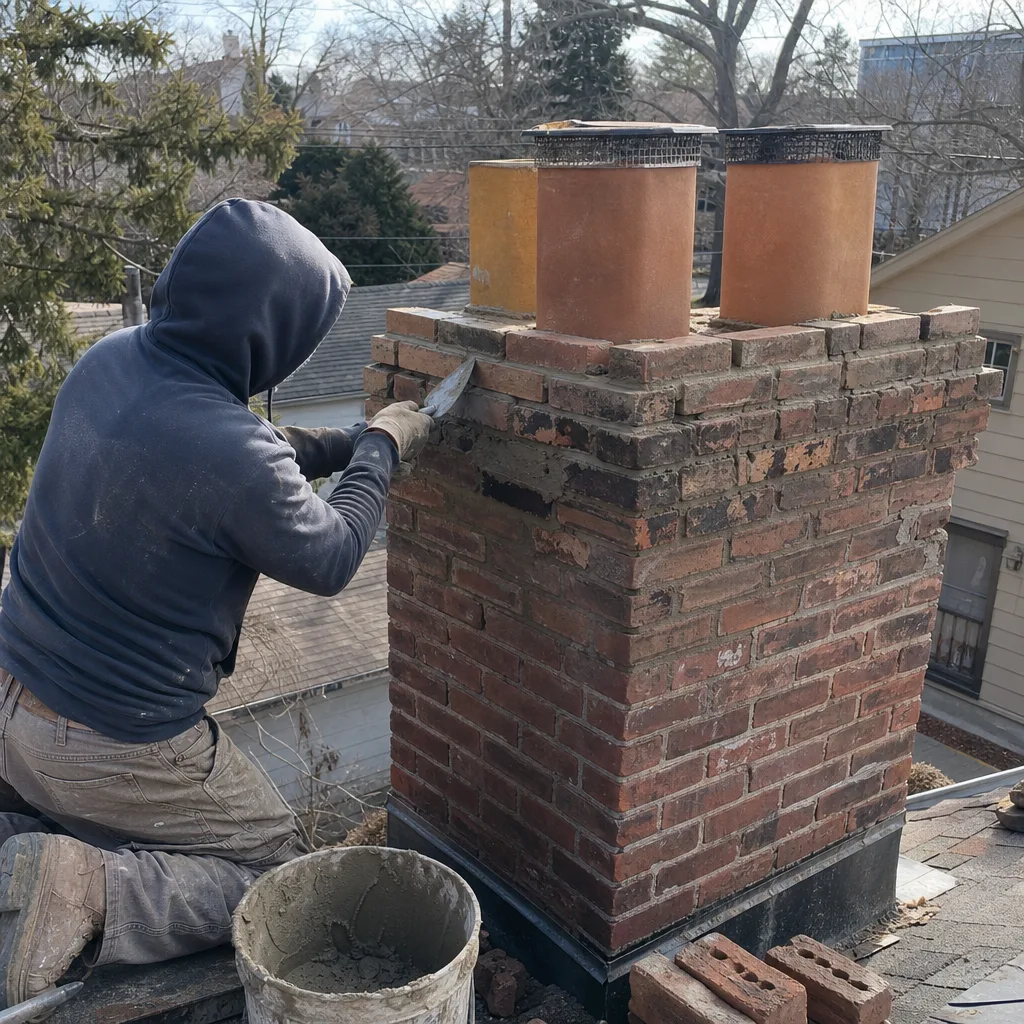
- Attempting crown or flashing repair without understanding freeze-thaw dynamics. Evanston’s climate destroys improper repairs within one season. Crown sealants that aren’t vapor-permeable trap moisture and accelerate spalling; flashing repairs without proper step and counterflashing integration leak within months.
When to Call a Professional
Call a professional sweep immediately if you notice: smoke entering the room during fireplace use; a strong, acrid odor from the fireplace when not in use; visible creosote flakes or tar-like deposits in the firebox; white or brown staining on exterior masonry (indicating moisture intrusion); or any separation, tilting, or damage to the chimney structure. These symptoms indicate conditions beyond DIY scope.
Schedule professional inspection before any real estate transaction, insurance policy renewal that requires documentation, or installation of a new heating appliance connected to an existing chimney. The Fireplace Services in Evanston that we provide include appliance changeout consultation, which determines whether your existing flue is properly sized and lined for the new equipment.
Level Two Chimney Evanston offers free estimates in Evanston. We’ll provide a written price before any work starts, including camera inspection and documented photo record. Call (708) 234-1174 to schedule, or return to our Level Two Chimney Evanston home page to learn more about our inspection standards.
Frequently Asked Questions
A standard chimney sweep with NFPA 211 Level 2 camera inspection in Evanston typically runs $175 to $295, depending on flue accessibility, number of appliances served, and whether the system is masonry or factory-built. This includes the documented photo record and written condition report. We provide a written price before any work starts - no exceptions. Call (708) 234-1174 for an exact quote; estimates are free.
A flue liner replacement is necessary when the existing liner is cracked, breached, improperly sized for the appliance, or missing entirely. We don’t recommend replacement without camera evidence you can see for yourself. In our Evanston inspections, we frequently find liners that are damaged but still functional with monitoring, and others that require immediate replacement for safety. The decision requires documented condition assessment, not assumption. If another company has recommended liner replacement, our Free Second Opinion on any written estimate lets you compare their evidence against our camera findings.
NFPA 211 recommends annual inspection for all chimneys, with cleaning as needed based on creosote accumulation. In practice, Evanston homeowners burning 2-3 cords of seasoned hardwood per season typically need annual sweeping. Those with gas appliances may extend to every 2-3 years if inspection shows clean conditions, though we still recommend annual inspection for the structural and liner condition check. The specific interval depends on your burning volume, fuel quality, and appliance efficiency - all factors we assess during the initial camera inspection.
Skipped maintenance leads to creosote accumulation that increases chimney fire risk, moisture intrusion that degrades masonry and metal components, and undetected liner damage that can allow combustion gases into living spaces. In Evanston’s older housing stock, we’ve seen skipped maintenance result in blocked flues from collapsed tile, crown failure that destroyed interior wall finishes, and carbon monoxide exposure from liner breaches. These outcomes develop gradually and are preventable with scheduled inspection. The cost of annual maintenance is a fraction of the cost of repairing fire or water damage, or of emergency liner replacement during heating season.
Most homeowner’s insurance policies don’t explicitly require professional chimney cleaning for coverage. However, after a chimney fire or related loss, insurers investigate maintenance history. DIY cleaning without documentation - dated photos, activity logs, or professional assessment - makes it difficult to prove reasonable care. Some insurers now specifically require professional inspection documentation for homes with solid-fuel appliances. Check your policy language, and consider that the cost of professional documentation is minimal compared to coverage dispute risk.
A Level 1 inspection is visual examination of readily accessible portions of the chimney exterior and interior, without specialized equipment - essentially what a homeowner can do with a flashlight and mirror. A Level 2 inspection, which we perform as standard on every visit, includes video scanning of the flue interior, inspection of accessible attics and crawl spaces for clearances, and evaluation of chimney connection to appliances. Level 2 is required for real estate transactions, after chimney fire or seismic event, or upon installation of new appliance. The camera documentation is what makes Level 2 meaningful for actual condition assessment.
The Bottom Line
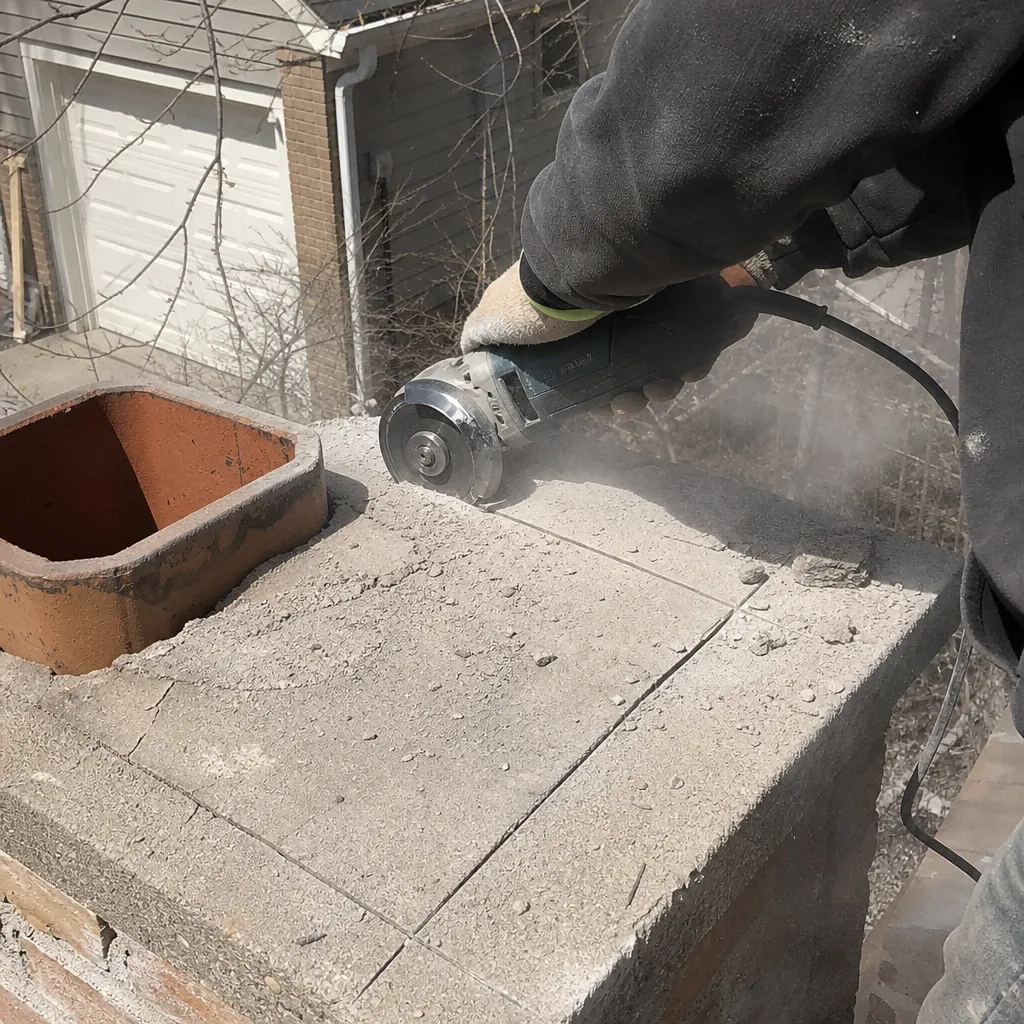
The DIY versus professional chimney cleaning question resolves to a documentation distinction, not a capability contest. A competent homeowner can maintain a clean firebox, functional damper, and unobstructed cap between professional visits. What they cannot produce - and what insurers, buyers, and warranty requirements demand - is the camera-scan record, written condition assessment, and professional certification that verifies the system’s safety.
In Evanston’s pre-war housing stock, the risk isn’t that DIY cleaning fails to remove soot. It’s that DIY cleaning provides false confidence in systems where liner deterioration, joint failure, and moisture damage are common and invisible. The $45 brush kit and the $175 professional sweep remove similar amounts of light creosote. Only one tells you whether the structure behind that creosote is intact.
The hybrid approach works: responsible homeowner maintenance between annual professional inspections, with documentation that creates accountability and protects property value. Start with a professional baseline, maintain diligently between visits, and never let undocumented maintenance substitute for verified condition assessment.
Written by Corrine Halstead, Owner at Level Two Chimney Evanston, serving Evanston since 2009.